

No other pop star changed his look as much as Michael Jackson did. Michael Jackson fashion moved with his music and each new album brought a new look. In the 1970s he wore bright colors with his brothers. Then a black tuxedo when he went solo. Then the red leather jacket that the whole world copied. After that came black leather and buckles and later the military jackets with gold. Each look said something about where he was in his life. In this blog we will discuss Michael Jackson style evolution, decade by decade from the Jackson 5 to his final years. The style kept moving but a few pieces never left. And this version covers every period, not just the famous outfits.
The 1970s: Bright Colors and the Jackson 5
Michael started out as a kid in a family band. The Jackson 5 signed with Motown in 1969 and their mother Katherine made their first stage clothes by hand. Bright satin vest suits and flared trousers, with each brother in a different primary color. Wide collars, bold prints and big hair. The afro was part of the look and so was the energy. Nothing about it was quiet. The clothes were made to be seen from the back row and they fit the sound. Young, loud and full of joy. This was the first version of Michael Jackson style and it belonged to the whole group, not just to him.
1972-1978: The Solo Years Begin
Michael began recording on his own while he was still in the group. His solo career started in 1971 and between 1972 and 1975 he released four solo albums with Motown: Got to Be There, Ben, Music & Me and Forever, Michael. The covers from those years show a teenager in everyday clothes. A cap and a corduroy jacket on one cover. A floral shirt and an afro on another. A guitar outdoors on the next one. No stage uniform yet. No glove, no fedora. Just a young singer finding his own voice. On stage the group look was still there, afros and bell bottoms but the solo records were the first step away from it. In 1975 the group left Motown, signed with Epic and changed their name to the Jacksons. Michael began taking more control of the songs and the sound. The clothes had not caught up yet. That happened four years later, with Off the Wall.
1979: Off the Wall and the Grown-Up Look
Off the Wall came out in 1979 and the look changed with it. On the album cover Michael wears a black tuxedo, a white shirt and a satin bow tie. It was a grown-up look, inspired by Frank Sinatra, Gene Kelly and Charlie Chaplin. The pants are cropped and under them are white socks and black loafers. That pairing became one of his trademarks and it started as something practical. White socks showed the feet while he danced and the loafers let him slide and spin. The colors were gone. The glitter was gone. A tuxedo said he was no longer a kid in a family band. He was a solo artist now and the clothes said so before the music started.
The 1980s: Thriller, the Red Jacket and the Glove
Then came Thriller, and everything went red. The album came out in November 1982, and the short film followed in December 1983, directed by John Landis. The video opens in the 1950s, with Michael in a red varsity letterman jacket with gold sleeves and a big M on the chest. Then the scene changes, and the red leather jacket takes over. That red leather jacket became the look everyone copied.
The Beat It video gave him a second red jacket in the same year, this one covered in zippers. Deborah Nadoolman Landis designed the Beat It jacket, and the Michael Jackson Beat It jacket keeps its silver mesh shoulder insets, front zipper with silver studs and detachable zippered sleeves. March 25, 1983, brought the third piece. At the Motown 25 TV special, Michael did the moonwalk for the first time, in a black sequined jacket, a black fedora and a single white glove covered in rhinestones. Bill Whitten made the glove. One glove, one hand. The whole world talked about it for years.
And the Thriller album cover had its own famous outfit too. Michael is leaning back in a white suit on the cover, and that suit was a Hugo Boss. It wasn’t even his. The photographer, Dick Zimmerman, was wearing it that day. Michael didn’t like the clothes picked for the shoot, so Zimmerman took off his own suit and lent it to him. It fit like it was made for him. The suit is now on show at the Grammy Museum, and Hugo Boss brought it back in 2018, with only 100 made.
1984-1986: Victory, Captain EO and the Middle Years
Thriller had no tour of its own, so the Victory Tour in 1984 did the job instead. The Jacksons played 55 stadium shows across the United States and Canada, from July to December and it was the last tour Michael did with his brothers. The stage look was the Thriller look: the black sequined jacket, the single glove and the moonwalk. But the year started badly. On January 27, 1984, during a Pepsi commercial shoot in Los Angeles, the pyrotechnics set his hair on fire and he suffered serious burns on his scalp. Pepsi paid a $1.5 million settlement and Michael gave the money to a burn center for children. He recovered but the burns left scars on his scalp and the long curls of the years after became part of the image. The next year brought Captain EO, a Disney short film directed by Francis Ford Coppola. On that set in 1985, Michael met Michael Bush and Dennis Tompkins, the two tailors who made his stage clothes for the next 25 years. The middle of the decade was a bridge. The red jacket years were behind him and the tough black leather of Bad was still two years away.
1987: Bad and the Tough Look
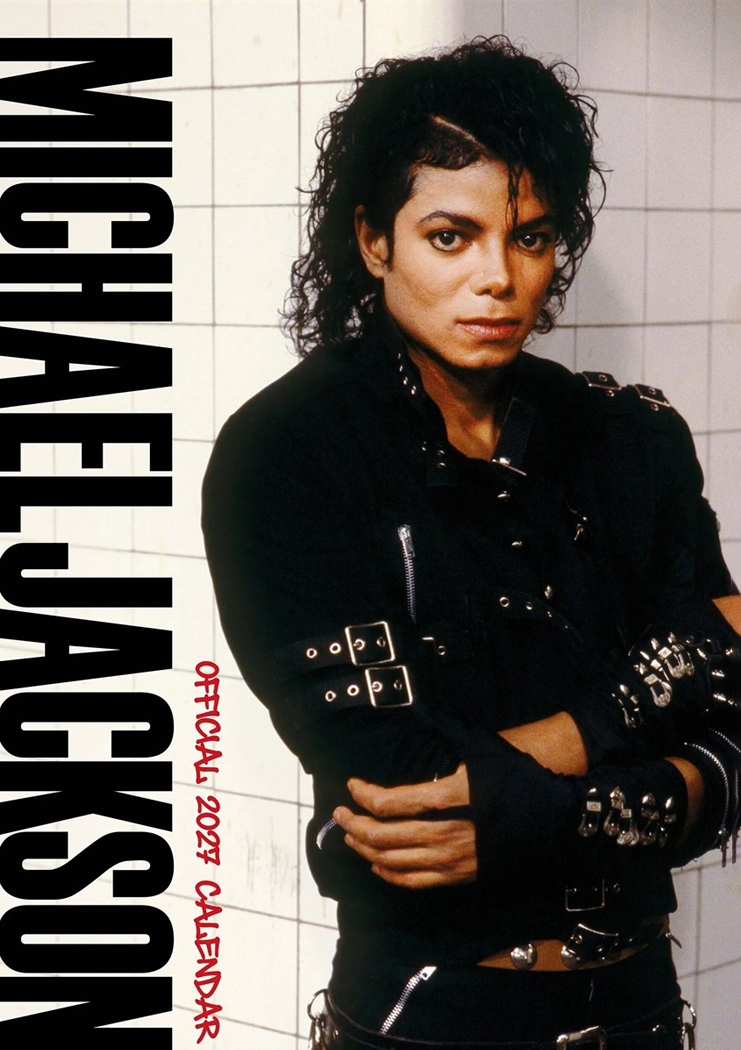
Bad came out in 1987, and the look turned tough. The black biker jacket on the album cover has straps, buckles and zippers all over it, and the Bad tour kept the same hard edge. The Smooth Criminal video went the other way, with a white suit and a silk armband, sharp and clean. Two looks in the same year, both sharp in opposite ways. By the time Bad came out, Dennis Tompkins and Michael Bush were running his wardrobe. They made his stage clothes for the next 25 years, around 800 to 900 costumes in all. Each album got its own look, and each look grew out of the one before it. That’s how the style kept moving without ever repeating itself.
The 1990s: Military Jackets and Gold
The 1990s made him a general. Dangerous came out in 1991 and the military look took over. Jackets with gold embroidery, epaulets and crowns on the buttons, inspired by British heraldry and the history of monarchies, in Michael’s own words. He loved British military history and the clothes showed it. The Super Bowl halftime show in January 1993 put the look in front of a huge TV crowd, a black and gold military jacket. HIStory kept the same idea going, with the gold armband and more gold trim. The military years were the most formal of his whole career. No more bright colors, no more street clothes. Just gold, black and white. A man who dressed like a king.
1997-2001: Blood on the Dance Floor and Invincible
The HIStory World Tour ran from September 1996 to October 1997, with 82 concerts in 58 cities for more than 4.5 million fans. On that tour the Thriller jacket came back in a new form, a version that glowed in the dark. In 1997 Michael put out Blood on the Dance Floor, a mix of remixes and five new songs. It became the best-selling remix album ever, with 6 million copies sold. The cover shows him in a red leather suit, a callback to the Thriller years in a darker shade. Then things went quiet. He spent much of the late 1990s out of the spotlight and the next album took years to finish. Invincible came out in October 2001, after four years of work and $30 million in recording costs. It went to number one in 13 countries. To mark 30 years as a solo artist, he played two anniversary concerts at Madison Square Garden on September 7 and 10, 2001, back on stage with his brothers for the first time since 1984. The Invincible cover tells the story of the era. It’s just a close-up of his face. No outfit, no jacket, no gloves. The look by then was dark suits and longer hair, more formal than ever and the clothes had stopped shouting.
The 2000s: The Final Years
Then came This Is It, 50 concerts planned at the O2 Arena in London for 2009 and 2010. The story behind the costumes is more complex than it looks. There were two teams. The official team came from AEG, with choreographer Travis Payne, his friend Zaldy as costume designer, and the band and musical director. But the story goes that Michael wasn’t too happy with some of Zaldy’s designs, so he asked Dennis Tompkins and Michael Bush to work on the side, making replacement looks. In the end Zaldy made ten of the looks, and Dennis and Michael made the other six. The costumes were covered in 300,000 Swarovski crystals. Michael died on June 25, 2009, 18 days before the first show, so the concerts never happened. The rehearsal film showed the clothes instead, and the crystal jackets became the last image of his style.
The Pieces That Never Left
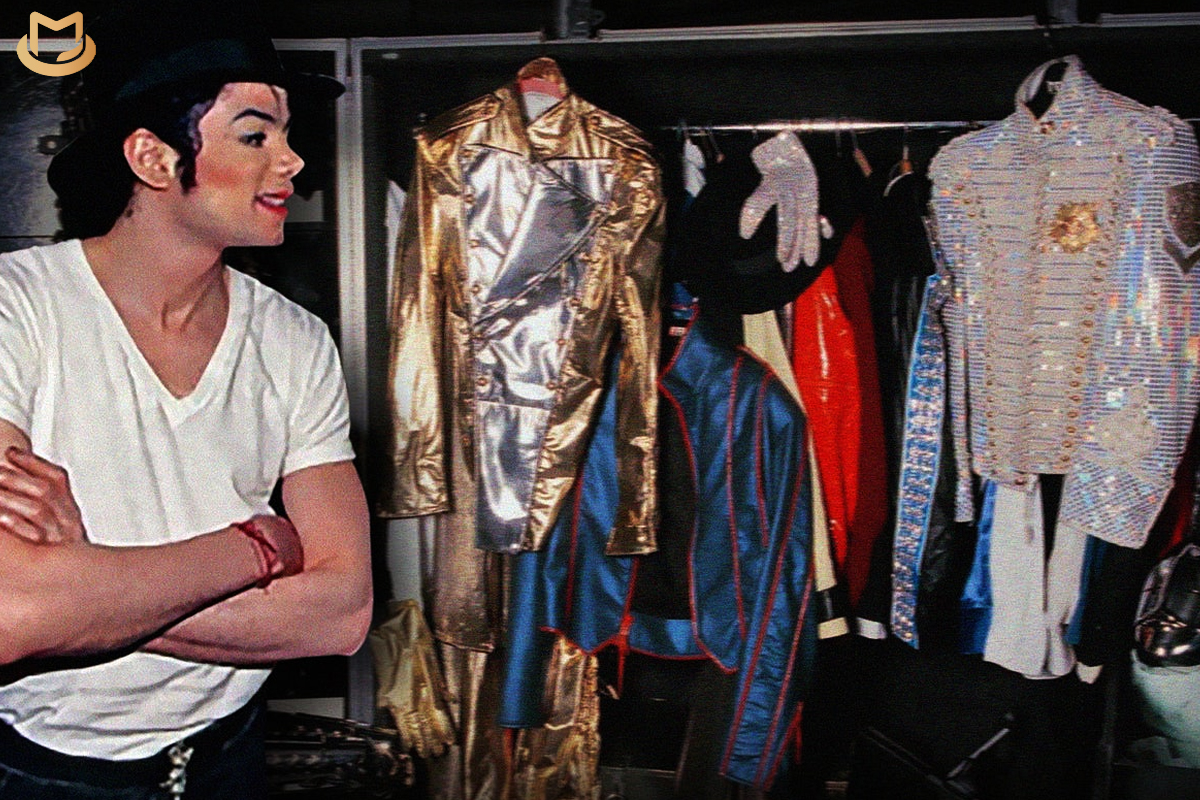
Through every decade, a few pieces never left. The single white glove, one hand only, from Motown 25 in 1983 to the end. The black fedora. The white socks and black loafers, the pair that started on the Off the Wall cover and stayed for 30 years. Michael performed in Florsheim loafers, the same plain shoes he taught himself to dance in as a kid. And the military jackets, which started in the 1990s and never really went away. Michael Jackson outfits changed every decade but the glove, the hat and the socks stayed the same. That’s what made the style his. Anyone could copy a jacket. Nobody else had the glove.
The Image Beyond the Clothes
The clothes were only half the image. The hair told the story too. The afro of the 1970s gave way to the long black curls of the Thriller and Bad years and those gave way to longer, straighter hair in the 1990s and 2000s. The face changed with it. The aviator sunglasses became a trademark of their own Ray-Bans he wore through the Thriller years and again at the Super Bowl in 1993. And then there was the skin. Michael said in a 1993 interview with Oprah Winfrey that he had vitiligo, a condition that takes the color out of patches of skin. His dermatologist confirmed it and the autopsy after his death confirmed it too. Makeup evened out his skin tone and he stayed out of the sun, because skin without pigment burns fast. That’s why the umbrellas, the long sleeves and the masks showed up in his public life. In his last years he appeared in sunglasses, masks and veils more and more, a private man who did not want to be seen. The image had gone from a group uniform to a solo identity to a man who did not want to be seen at all. The clothes stayed sharp through all of it. The man inside them pulled away.
Wear the Look Today
You don’t need a stage to wear Michael Jackson outfits. The Inspired Jackets makes Michael Jackson jackets and each one is a different piece of the story. The Michael Jackson Thriller jacket is the red leather one from the short film, genuine or faux leather, stand-up collar and snap-tab button closure. The Michael Jackson Beat It jacket is the red zipper jacket from the Beat It video, genuine leather with silver mesh shoulder insets and detachable zippered sleeves. The Michael Jackson Varsity M Letterman jacket is the red and yellow varsity from the opening scene, wool body with leather sleeves and the big M on the chest. All three come in men’s and women’s sizes. The full Michael Jackson collection has the rest of the range, so you can pick the era that fits you best.
Conclusion
Michael Jackson fashion changed every decade and that was the point. The Michael Jackson style evolution runs like this. Bright colors for the Jackson 5. Everyday clothes for the early solo years. A tuxedo for Off the Wall. Red leather for Thriller. Black leather and buckles for Bad. Gold and military for the 1990s. Red leather again for Blood on the Dance Floor. Dark suits for Invincible. Black, white and gold for the end. The clothes were part of the show. Michael Jackson jackets are still copied today because they were built to be seen. Pick the decade you love most and wear it.