

Protect Michael Jackson’s Legacy… Unless a Fan Uses AI? Are Michael Jackson fans applying double standards when it comes to AI-generated content?
A few days ago, we published an article about Sony Music going after AI deepfakes, including AI-generated music imitating Michael Jackson’s voice. The response from the fans was pretty unanimous: Good!
Read our previous article here.
Most of the fans who commented on our social media platforms and on the article supported the move. They wanted Sony Music and the Estate to protect Michael Jackson’s voice, image, music and artistic legacy. And frankly, I am one of them.
But then something happened.
A “fan-made”, AI-generated music video for Michael Jackson’s “Xscape” appeared on YouTube, and suddenly, a large part of the fan community went crazy over it.
Love it, like it or hate it, the comments and shares have been overwhelmingly positive. Fans are praising the video, asking for more and getting emotional about what they are watching.
And I am shocked.
Not because people are enjoying something I personally dislike, but because I cannot help wondering where all those principles we were defending just days ago have suddenly gone.
It’s Not Michael Jackson. It’s AI.
Let me make one thing clear from the beginning. I do not like AI-generated videos or pictures depicting Michael Jackson, and that is why I will not link to the “Xscape” video in this opinion piece.
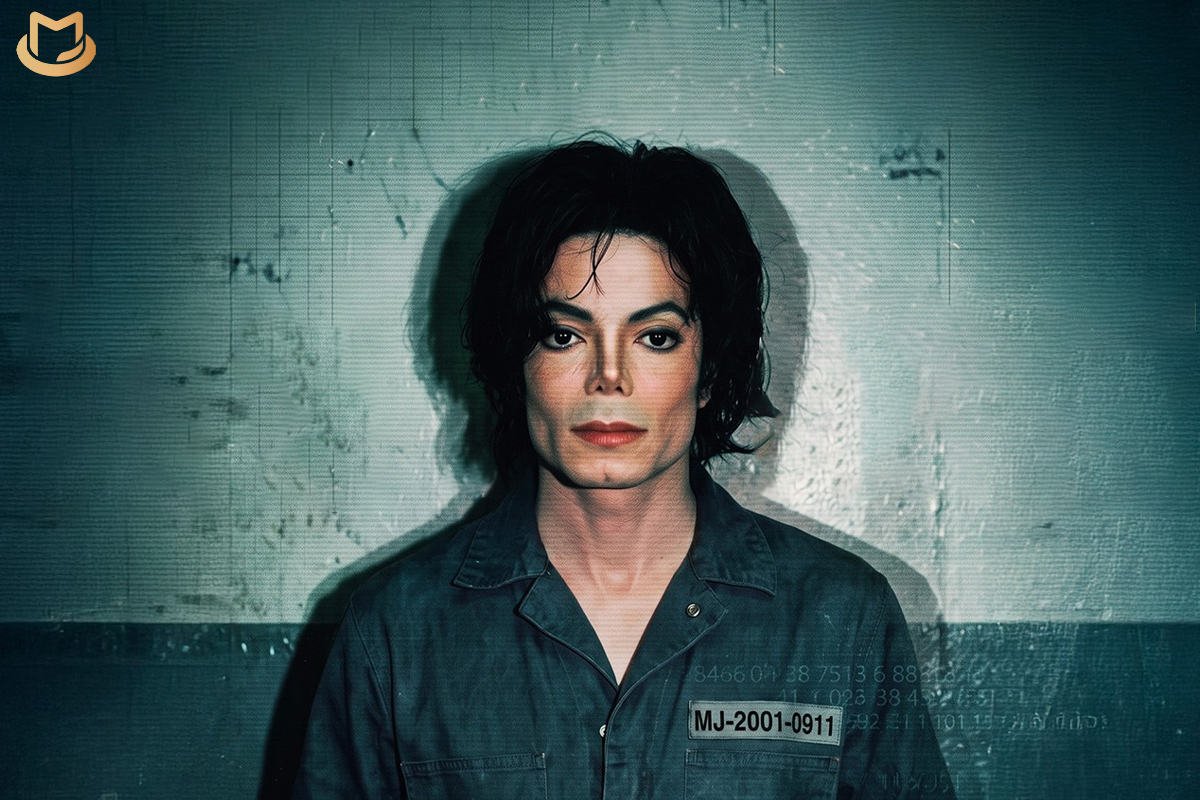
I dislike them because they are not Michael. They are artificial representations of him, created by technology that can make something look convincing without making it authentic.
Some are poorly made. Others might look impressive at first glance. But the biggest problem is not whether they look good or bad. It is what happens when those images and videos are shared, reposted and eventually separated from their original context.
We have already seen this happen.
Remember when a French YouTuber created AI-generated imagery inspired by Michael Jackson’s “Blood on the Dance Floor” photoshoot? Screenshots from that video subsequently circulated on social media, with some people presenting them as unseen or unreleased photographs of Michael.
They were not! They were fake images generated by AI.
This is precisely the problem. An image created for entertainment can eventually be mistaken for an authentic piece of Michael Jackson history. Someone shares it without an explanation, someone else reposts it, and before long, people who were not around during that era may genuinely believe they are looking at something Michael actually did.
We are no longer simply talking about technology or personal taste. We are talking about the risk of rewriting history.
We risk replacing Michael’s actual appearance, artistic decisions and creative work with fabricated versions of him. We risk blurring the line between what he genuinely created and what someone else has imagined him doing.
And that should concern every fan who claims to care about preserving his legacy.
So, Why Are We Celebrating This?
This is where I struggle to understand our community.
When Sony Music announces that it is taking action against AI-generated music and deepfakes, fans applaud. They say Michael’s voice must be protected. They say his artistic legacy must be respected. They say enough is enough.
Yet, when an AI-generated music video appears online, apparently made by a fan, many of those same people celebrate it.
They praise the creator. They ask for more. They share it with other fans.
So, what exactly are we defending? Is it Michael Jackson’s artistic legacy, or are we only defending it when the person responsible for the AI content is someone we dislike?
Are we applying double standards? Are we being hypocrites? You decide. I know where I stand.
What If Sony Music Had Released It?
Let us play a little game.
Imagine that the exact same AI-generated “Xscape” video had been commissioned and released by Sony Music and the Estate.
What would the reaction have been?
I can already imagine the comments: “Scandalous!” “Disrespectful!” “The Estate should be fired!” “Why are they using AI instead of respecting Michael’s original work?”
The outrage would probably have been considerable. But because the video comes from a so-called fan, the reaction is suddenly different. And yes, I am deliberately putting “fan” in quotation marks. Not because I can prove that the people creating these videos do not love Michael Jackson, but because I believe we should look beyond the label. We should ask questions about the motivations behind this content.
Is it a tribute? Is it an experiment with new technology? Is it about gaining recognition, building an audience, generating revenue or simply attracting attention?
The answer will not necessarily be the same for everyone. Some creators may genuinely want to pay tribute to Michael. Others may have different ambitions.
But being a fan does not automatically make every creative decision respectful, and calling something a tribute does not mean we should stop questioning it.
Remember the 4K Controversy?
There is another example worth remembering.
When the Estate enhanced some of Michael Jackson’s original music videos for 4K releases and acknowledged the use of AI tools in the process, a significant number of fans were outraged (me included, not because I disagree with that, but just because the result wasn’t that good to be honest).
They complained that Michael’s original work had been distorted. They questioned why the videos had not received a conventional professional restoration instead.
The criticism was loud.
Now, I understand that there are legitimate discussions to be had about restoration methods, image quality and preserving original footage. Technology should not automatically be celebrated simply because it is new.
But that is exactly my point.
If fans believe AI can compromise Michael’s original work when used to enhance existing footage, why are they so enthusiastic about AI being used to invent footage that never existed in the first place?
How can we object to technology changing what Michael actually did while celebrating technology that creates things he never did?
Where is the consistency?
Think About the Next Generation of Fans
This is what bothers me most.
Since the release of the Michael biopic, our community has grown significantly, with younger generations discovering Michael Jackson and his music.
That is fantastic. I welcome every new fan who discovers his talent, his creativity and his extraordinary body of work.
But many of these new fans are only beginning their journey. They may not know every era, every photoshoot, every performance or every unreleased project. They may not have the knowledge that comes from decades of following Michael’s career.
Some of us have spent decades researching his work. Some of us lived through the Jackson 5 era, Off the Wall, Thriller, Bad, Dangerous, HIStory and Invincible. We remember the original footage, the photographs, the television appearances and the way Michael presented his work to the world.
We have a reference point.
A younger fan discovering Michael today may not have that same reference point. They might encounter an AI-generated video on YouTube, see it shared repeatedly on social media and assume it represents something authentic.
They might save it, repost it or tell other fans about this amazing piece of Michael Jackson footage they have supposedly discovered.
And that genuinely upsets me.
Because once misinformation enters the community, it can be difficult to correct. Even when someone eventually explains that an image or video was AI-generated, the original impression may remain.
We should be helping new generations discover the real Michael Jackson, not making it harder for them to distinguish fact from fiction.
What If His Haters Did the Same?
A wise fan once asked me a question that completely changed the way I looked at this issue.
“Can you imagine if the haters did the same?”
At first, I did not understand what they meant. Then the penny dropped.
Imagine someone who hates Michael Jackson creating an AI-generated video depicting him doing something that never happened. Imagine that video being shared online without any clear indication that it was fabricated.
How would we react?
We would be furious. We would call it fake. We would demand that people stop spreading lies about Michael. We would insist that his image should not be manipulated to create a false impression of him.
And rightly so.
But how can we demand that standard from people who want to damage Michael’s reputation if we are willing to abandon it when an AI creation entertains us?
The technology does not suddenly become harmless because the person using it claims to love Michael.
The same tools can be used to create a flattering fantasy, a convincing fake photograph or a completely fabricated scene. We cannot control every possible use, but we can decide what we encourage, share and celebrate within our own community.
And that responsibility starts with us.
Is All AI Content Bad? No.
Now, before someone accuses me of being completely against AI, let me explain my position.
I believe AI can be used wisely as a tool. I have no problem with fan clubs, organisations or event organisers using AI-generated images to promote their activities, provided the content is presented honestly and does not mislead people.
Let’s face it, in many cases, it is obvious that the imagery is AI-generated. Some of it is becoming repetitive and, frankly, rather boring to see everywhere, but that is another discussion.
I have even used AI to create two or three images for MJVibe to illustrate articles. Sometimes, it can be a quick and practical way to represent a subject when a suitable photograph is unavailable.
But I have never used AI to generate an image of Michael Jackson himself, and I want to make that distinction clear.
There is a difference between using AI to illustrate a subject and using AI to fabricate Michael Jackson.
There is also a difference between creating an obviously artificial promotional image and presenting a fabricated photograph as an authentic, previously unseen image of him.
Context matters. Transparency matters. Intent matters.
And yet, I have seen fan clubs and organisations criticised for using AI-generated promotional images. MJVibe received similar criticism on the occasions we used AI illustrations.
Some fans argued that AI should not be used at all. Others said it was environmentally damaging. Some even claimed Michael would not have approved.
Those are discussions worth having, even if we do not all agree.
But where are those same objections now? Why are some of the people who criticised AI imagery suddenly celebrating an AI-generated video of Michael?
If you believe AI should never be used, surely that principle should apply regardless of who creates the content.
And if you believe there are acceptable and unacceptable uses of AI, then perhaps we need to explain where we draw the line.
We cannot have it both ways.
Not Everyone Has the Same Motivation
I also want to be fair to those who use AI to create promotional material for fan clubs, events and organisations.
These are often people who have jobs, families and busy lives. They volunteer their time, money and resources to bring fans together, organise events and keep the community alive.
Not everyone has the time to learn Photoshop or InDesign. Not everyone has professional design skills or the budget to commission artwork.
For some, AI is simply a practical tool that helps them achieve something they could not otherwise create. I understand that.
Many people do what they do because they love Michael Jackson and want to give something back to the community. They want to meet other fans, celebrate his music and create experiences for people who share their passion.
We should not automatically condemn them for using a tool that helps them do that.
However, I also think we need to be realistic about what has happened since the biopic brought renewed attention to Michael.
Whenever something becomes popular, people see an opportunity. New accounts, businesses, events and projects appear. Some will be genuine passion projects. Others may be primarily commercial.
There is nothing inherently wrong with making money from legitimate work. But when AI-generated imagery is used to attract attention, generate views or promote a product or event, we should be asking what we are actually supporting.
A creator who genuinely wants to pay tribute to Michael is not necessarily motivated by the same things as someone who wants to maximise views, build a following or generate revenue from sensational content.
We cannot know everyone’s intentions simply by looking at a video. Nor should we assume that everyone who creates AI content is acting in bad faith.
But we should not be so dazzled by something new that we stop asking questions.
Our enthusiasm should never replace our judgement.
So, Where Do We Go From Here?
Some of you will probably be thinking, “Oh, fuck off, Sebastian. We can do what we want!”
And you are absolutely right.
We can all make our own choices. We can like what we like, watch what we want and disagree with one another.
I am not asking anyone to follow my personal taste or to stop enjoying something simply because I do not like it.
What I am asking is that we think about the principles we claim to defend.
If we want Michael’s voice protected, we should care about how his voice is used, whoever is doing it.
If we want his image protected, we should care about fabricated imagery, whoever creates it.
If we want his artistic legacy respected, we should be careful about celebrating content that blurs the line between his real work and someone else’s invention.
And if we believe AI-generated content can be acceptable in some circumstances, we should be willing to explain why, rather than applying one set of rules to Sony Music and the Estate and another to our fellow fans.
I know that when the majority of a community moves in one direction, those who disagree can sometimes feel uncomfortable speaking up. They may fear being attacked, dismissed or accused of spoiling everyone’s fun.
But disagreement is not an attack. Asking questions is not hatred. And raising concerns about Michael Jackson’s legacy should not make anyone less of a fan.
This is why I am using MJVibe to express a different point of view.
For Michael. For the community. And for those who share these concerns but may not feel comfortable voicing them.
If this article makes even one person stop and think, “I had not looked at it that way before”, then it has served a purpose.
Perhaps we need a wider conversation about the boundaries we want to establish as a community. Not a set of rules imposed on everyone, but some shared principles about authenticity, transparency, respect and the preservation of Michael’s legacy.
Because we should be asking ourselves a very simple question.
What are we willing to compromise in exchange for a little more content about Michael Jackson?
We already have decades of extraordinary music, short films, performances, photographs, interviews and archival material to celebrate. We do not need to invent a new Michael Jackson to keep his legacy alive.
I would rather discover something real that I have never seen before than watch something fake that looks like Michael (or not).
And if that makes me old-fashioned, so be it.
Michael Jackson deserves better than a fan community that defends his legacy only when it suits us.
Sebastian for MJVibe