


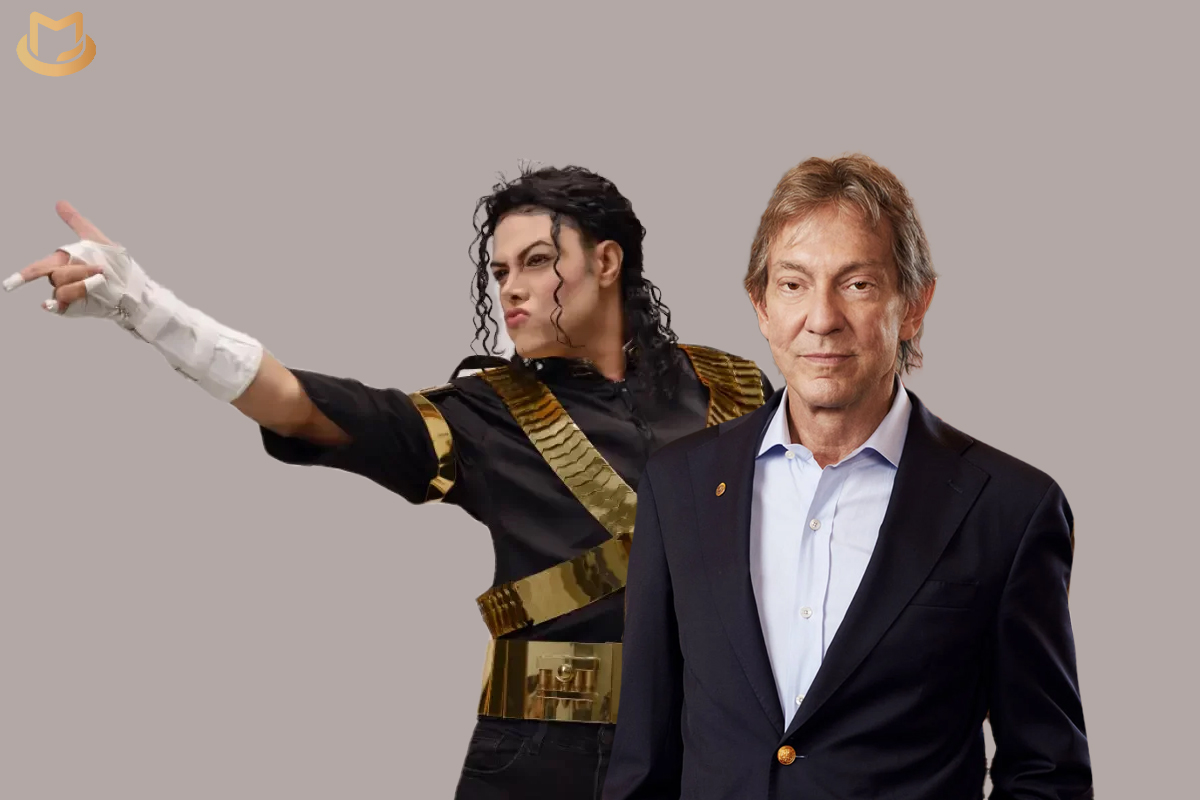
Rodrigo Teaser says a planned television performance was stopped after the production was allegedly told that Michael Jackson’s music could not be used, raising new questions about how the Estate is dealing with the world’s biggest Michael Jackson tribute artists.
The relationship between Michael Jackson tribute artists and the Estate of Michael Jackson may have taken an unexpected turn.
Brazilian performer Rodrigo Teaser, one of the most prominent Michael Jackson tribute artists in the world, has taken to social media to express his frustration after a planned television appearance was reportedly stopped at the last minute.
According to a report published in Brazil, Teaser had been invited to appear on SBT, one of Brazil’s major television networks. The report says he had already arrived at the studio, was in the dressing room and had his dancers ready to perform Michael Jackson classics including Billie Jean, Bad and Thriller, when the production was reportedly notified that the songs could not be used. The report says the veto came from the record company, allegedly at the direction of the Michael Jackson Estate.
Teaser subsequently posted a series of Instagram Stories expressing his frustration and disappointment.
In one of the posts, he wrote:
“I don’t know if it will remain only on TV!”
He then clarified that the television appearance itself was not what mattered most to him:
“For me, the issue isn’t TV itself, but the fact of not appearing.”
But it was what he perceived as a disregard for his life’s work that appears to have hurt him most.
“What hurt me deeply was them completely disregarding what motivates my existence: defending and protecting Michael’s image!”
And finally:
“That’s what hurt me.”
A surprising development
This is particularly significant because Rodrigo Teaser is not an unknown performer attempting to build a career by impersonating Michael Jackson.
Teaser has spent decades building a professional career around his tribute to Michael Jackson. His show has toured internationally and has become a major production involving dancers, musicians, technicians and other members of a professional touring crew.
His work has also been featured by major television networks before. In 2018, for example, Brazilian TV Globo’s Encontro presented Teaser as a Michael Jackson cover artist and had him perform Billie Jean on the program.
More recently, TV Brasil presented an entire special built around Teaser’s tribute production, describing his performances as a major production featuring Michael Jackson’s songs, costumes and choreography.
He has also performed internationally and continues to tour extensively.
In other words, this is not simply a fan who occasionally dresses up as Michael Jackson.
Rodrigo Teaser has built a business around his tribute to Michael Jackson.
And that is what makes the latest situation so interesting.
Tribute Versus Commercial Exploitation
There is an important distinction between celebrating Michael Jackson through a tribute performance and commercially exploiting intellectual property belonging to Michael Jackson’s Estate.
Teaser himself has previously spoken about the subject and about the importance of respecting the Estate’s intellectual-property rights.
His professional production has historically been presented as a live tribute rather than as an official Michael Jackson production. He has also explained that his show is performed live and that his team has taken care over the years to avoid unauthorized use of Michael Jackson recordings and other protected material.
That distinction becomes particularly important when looking at the latest incident.
If a television production decided not to proceed because the use of Michael Jackson’s music had not been cleared, that is potentially a different situation from the Estate simply attempting to prevent someone from impersonating Michael Jackson.
At this point, we do not have documentation showing exactly what legal notice was sent to SBT, which rights were specifically invoked, or whether the Estate itself directly contacted the production.
The Brazilian report states that the songs were vetoed by the record company at the Estate’s direction, but the Estate has not publicly confirmed that account at the time of writing.
And that distinction matters.
Does Every Michael Jackson Impersonator Need to Worry?
This naturally raises another question:
Does this mean every Michael Jackson impersonator should now be worried?
Probably not to the same degree.
There is a very big difference between someone performing a Michael Jackson dance at a local pub, taking part in a small dance competition or putting on a modest tribute show and one of the world’s biggest Michael Jackson tribute artists running a large-scale commercial production.
The biggest tribute artists are making a living from these shows.
Their productions can sell thousands of tickets and generate enough revenue to pay dancers, musicians, technicians, production staff, crew, venues, promoters and, ultimately, the performer themselves.
The bigger tribute productions are businesses.
And that could be where the Estate’s interest becomes particularly relevant.
A person performing Billie Jean at a local pub for a relatively small fee does not represent the same commercial proposition as a major international Michael Jackson tribute production selling thousands of tickets under a carefully constructed Michael Jackson persona.
The financial scale is completely different.
So, if the Estate is becoming more aggressive about protecting Michael Jackson’s intellectual property, it would make sense that the “big sharks”, the highly commercial, highly visible tribute productions, could attract considerably more attention than someone performing a Michael Jackson dance-off at a local venue.
But that does not mean smaller impersonators are automatically exempt.
The use of Michael Jackson’s name, trademarks, photographs, video, recordings, music, choreography and other elements associated with his identity can raise different intellectual-property, licensing and publicity-rights questions.
Not all of those issues are necessarily copyright issues, and not every use will automatically constitute infringement. The specific circumstances, the material being used, the manner of use and the relevant licenses all matter.
That is precisely why this story could become bigger than Rodrigo Teaser.
The question may not ultimately be:
“Is the Estate going after Michael Jackson impersonators?”
It may instead be:
“Where does the Estate draw the line between a fan tribute and a commercial business built around Michael Jackson’s identity and intellectual property?”
The Estate’s Growing Focus on Intellectual Property
This latest development comes only months after MJVibe reported on the growing enforcement surrounding Michael Jackson-related intellectual property.
In our May article, Michael Jackson Merch Boom and Rising Trademark Enforcement – MJVibe, we highlighted the increasing trademark activity surrounding the Michael Jackson brand.
The Estate’s determination to protect Michael Jackson’s intellectual property is certainly not new.
In 2018, for example, the Estate publicly objected to ABC’s The Last Days of Michael Jackson, arguing that the television special used copyrighted photographs, music, video and other intellectual property without authorization. The Estate subsequently sued Disney and ABC, alleging numerous copyright violations.
The Estate has also previously made clear that it does not license or permit the use of rights it owns, including Michael’s music, images, video and films, for unauthorized projects seeking to exploit his legacy.
So the idea that the Estate is protective of Michael Jackson’s intellectual property is hardly new.
What may be changing is where that enforcement is being felt.
Michael Jackson’s commercial value has increased enormously again in recent years. The upcoming Michael biopic, renewed interest in his music and catalogue, merchandise, touring projects and the continued growth of the Michael Jackson brand have all created an environment in which intellectual-property enforcement becomes increasingly important.
And tribute artists are inevitably part of that conversation.
But What Makes Rodrigo Teaser Different?
There is another fascinating element to this particular story.
Teaser does not appear to view himself as someone exploiting Michael Jackson.
Quite the opposite.
For him, Michael Jackson has been the central artistic inspiration of his life.
His relationship with Michael’s work began when he was a child, and he has spent decades developing his ability to reproduce Michael’s dancing, performance style and stage presence.
His tribute production has now travelled across multiple countries and continents.
In March 2026, for example, TV Record Europe described Teaser as one of the world’s major Michael Jackson tribute artists while interviewing him about his international career.
And only days ago, Teaser was in Los Angeles attending a charitable event at Hayvenhurst, where he met Michael Jackson’s children, Prince and Bigi Jackson. A Brazilian report about the meeting said Prince was already familiar with Teaser’s work and that Teaser has performed his tribute show across 15 countries and four continents.
That makes the timing particularly striking.
On one hand, Teaser has spent years defending Michael Jackson’s legacy through his performances.
On the other, he now says he has been prevented from appearing on television because of restrictions surrounding Michael Jackson’s music.
It is easy to understand why he would find that painful.
“What Motivates My Existence”
Perhaps the most revealing part of Teaser’s reaction is not that he lost a television appearance.
It is why he says the incident hurt him.
In his Instagram Stories, Teaser essentially argues that the people behind the decision failed to understand what his work represents to him.
His words were particularly emotional:
“What hurt me deeply was them completely disregarding what motivates my existence: defending and protecting Michael’s image!”
That is a very different message from someone complaining simply because they lost a television booking.
Teaser believes that his career has been dedicated to keeping Michael Jackson’s artistic legacy alive.
And there is an undeniable irony in the situation.
The Estate’s responsibility is to protect Michael Jackson’s legacy and intellectual property.
Teaser believes his responsibility is also to protect Michael Jackson’s legacy — through performance.
The two interests do not necessarily have to conflict.
But when commercial rights, music licensing, trademarks and image rights enter the equation, they potentially can.
No Confirmation From the Estate — Yet
There is an important caveat to this story.
At the time of publication, we have not found a public statement from the Michael Jackson Estate confirming that it directly ordered SBT to cancel or prevent Rodrigo Teaser’s performance.
The information currently available comes primarily from Teaser’s social-media posts and reporting in Brazil.
The Brazilian report identifies SBT as the television program involved and says the production was notified that the Michael Jackson songs could not be used, allegedly following instructions from the record company and the Estate.
We therefore need to be careful about describing this as a confirmed “Estate veto” until the Estate, the record company or SBT provides further information.
There are also unanswered questions.
Was the issue specifically the public performance of Michael Jackson’s compositions?
Was a television synchronization or other license required?
Was the problem the use of Michael Jackson’s name or image in promoting the appearance?
Was there a broader objection to tribute performances on television?
Or was there simply a misunderstanding between the production and the rights holders?
Those questions remain unanswered.
A Bigger Question for the Michael Jackson Tribute Community
Whatever ultimately happened behind the scenes, the Rodrigo Teaser incident raises a much bigger issue for the Michael Jackson tribute community.
There are hundreds, perhaps thousands, of people around the world who perform as Michael Jackson.
Most are simply fans.
Some perform at local venues.
Some participate in dance competitions.
Some do private events.
And a much smaller number have turned their tribute work into serious professional businesses.
Those categories are very different.
If the Estate is becoming more proactive in protecting Michael Jackson’s intellectual property, it seems unlikely that every person who puts on a fedora and performs the moonwalk is going to become a target.
But the most commercially successful tribute artists operate on an entirely different scale.
They sell tickets.
They employ people.
They tour internationally.
They advertise themselves as Michael Jackson tribute acts.
And they generate significant revenue from performances that deliberately recreate aspects of one of the most recognizable entertainers in history.
That creates a legitimate conversation about where the boundaries should be.
How much is a tribute?
How much becomes commercial exploitation?
And at what point does an artist need permission, licensing or other clearance from the rights holders?
Those are not easy questions.
And the Rodrigo Teaser situation may be the first sign that they are becoming increasingly important.
For Now, More Questions Than Answers
Rodrigo Teaser has made his position clear.
He says he was deeply hurt by what happened and, according to Brazilian reporting, has indicated that he does not intend to appear on television in character as Michael Jackson while the restriction remains in place.
But his touring career continues.
His tribute production continues.
And his dedication to Michael Jackson’s legacy clearly has not changed.
What remains to be seen is whether this was an isolated television licensing issue or the beginning of a broader change in how the Michael Jackson Estate approaches tribute artists.
Because if the Estate really is beginning to take a closer look at the biggest commercial Michael Jackson impersonators, Rodrigo Teaser may not be the last name we hear in this conversation.
For the small-time impersonator performing for fans at a local venue, there may be little reason for panic.
For the big sharks, the performers running major productions and making a substantial living from recreating Michael Jackson, this could be a very different story.
And that is why the Rodrigo Teaser incident deserves attention.
Is the Estate of Michael Jackson going after impersonators?
Perhaps the more accurate question is:
How far will the Estate go to control the commercial use of Michael Jackson’s image, music and legacy and where will it draw the line?
MJVibe will be watching.



I agree a line needs to be drawn somewhere. If not the effects of an impersonation or impersonator can and will be taken out of context in some form or fashion. It can cripple Michael’s body of work and legacy. Just my thoughts ❤️
Poor Rodrigo and all the other MJ Impersonators who make a lot of money off of him, and the choreographers who created the dances. They’ve been stealing my/our work for years with no payment to me/us, not even credit. I hope the plug gets pulled on all of them. THERE IS ONLY 1 MICHAEL JACKSON!!!!!!!!!!!!!!!