

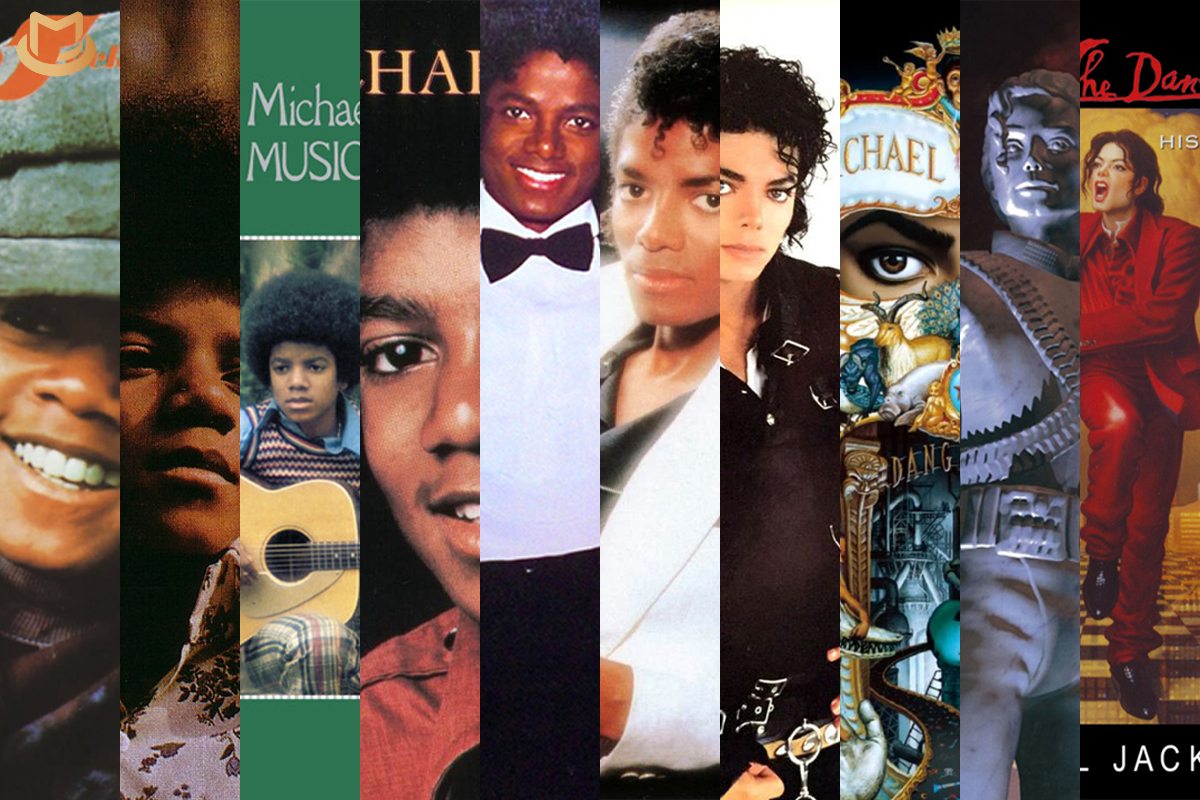
Michael Jackson’s clothes were never just clothes. From his first solo records to his biggest albums, what he wore on a cover told fans who he was at that moment. A boy in a simple portrait. A grown man in a tuxedo. A star in a white suit. A tougher figure in black leather. Honestly, the clothes mattered as much as the songs because they set the mood before anyone pressed play.
This article looks at ten covers, from his early solo years to his later image. The three covers that defined him as a solo star come first then the early records that led up to them and then the later covers that turned his image into something bigger. One rule applies throughout. Every outfit here is actually visible in the album cover artwork. Famous video costumes don’t count, even when they come from the same era.
1. Off the Wall (1979): The Black Tuxedo
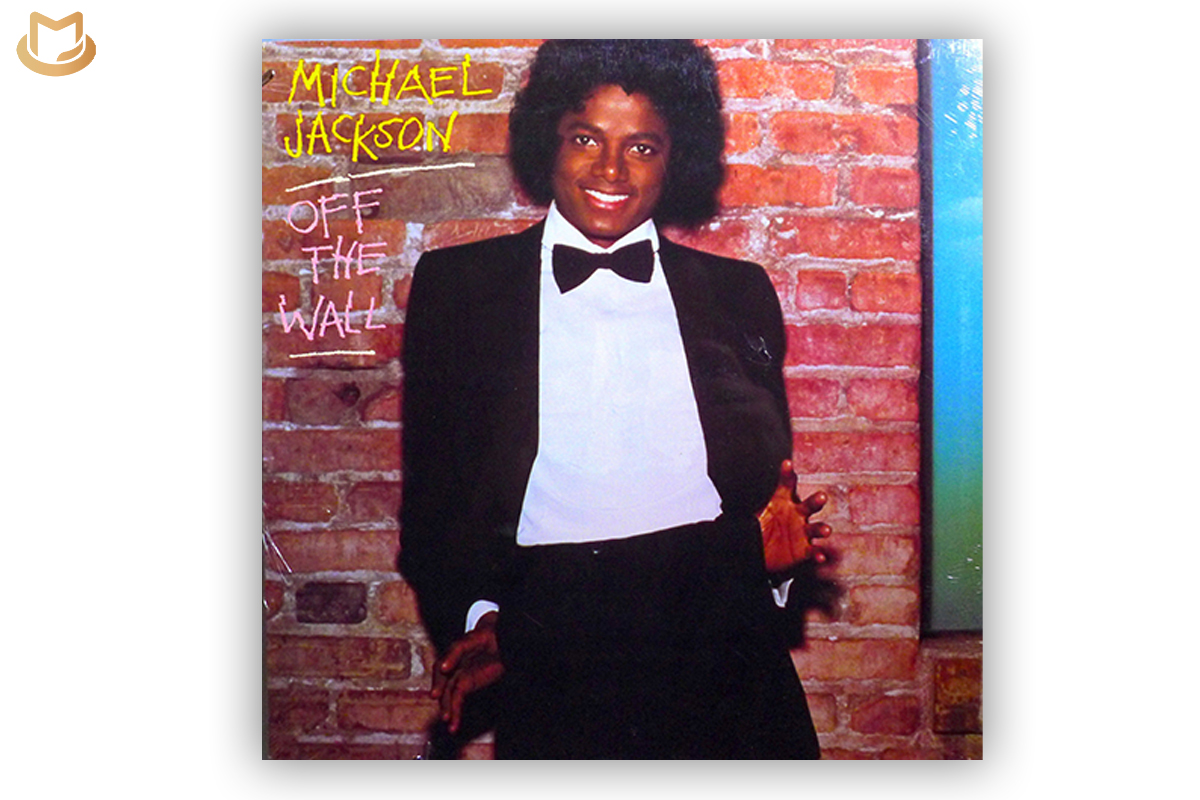
The cover shows Michael in a black tuxedo, a white shirt, a black bow tie and white socks. He leans against a brick wall, smiling, relaxed. Nothing about the pose is stiff. And that’s the point. The formal clothes say grown man. The easy pose says he’s comfortable in them.
The story behind the outfit is almost as good as the photo. The label’s first idea was very different: a young Michael in children’s clothes, sitting on a log by a campfire. The cover’s creative team threw that out. Art director Mike Salisbury wanted a black-and-white image that could work like a brand mark, with Michael in a tuxedo. Michael listened to the pitch from behind velvet drapes, said he liked it and asked for one change only. White socks.
There’s one more twist. The tuxedo wasn’t even his. It was a woman’s tuxedo from Yves Saint Laurent in Beverly Hills, bought by Salisbury’s wife because it fit him. His loafers took their cue from Gene Kelly’s shoes in An American in Paris. Put together, the cover announced a new stage: no longer just the kid from the Jackson 5, but a solo artist with his own look.
2. Thriller (1982): The White Suit and the Red Leather Jacket Legacy
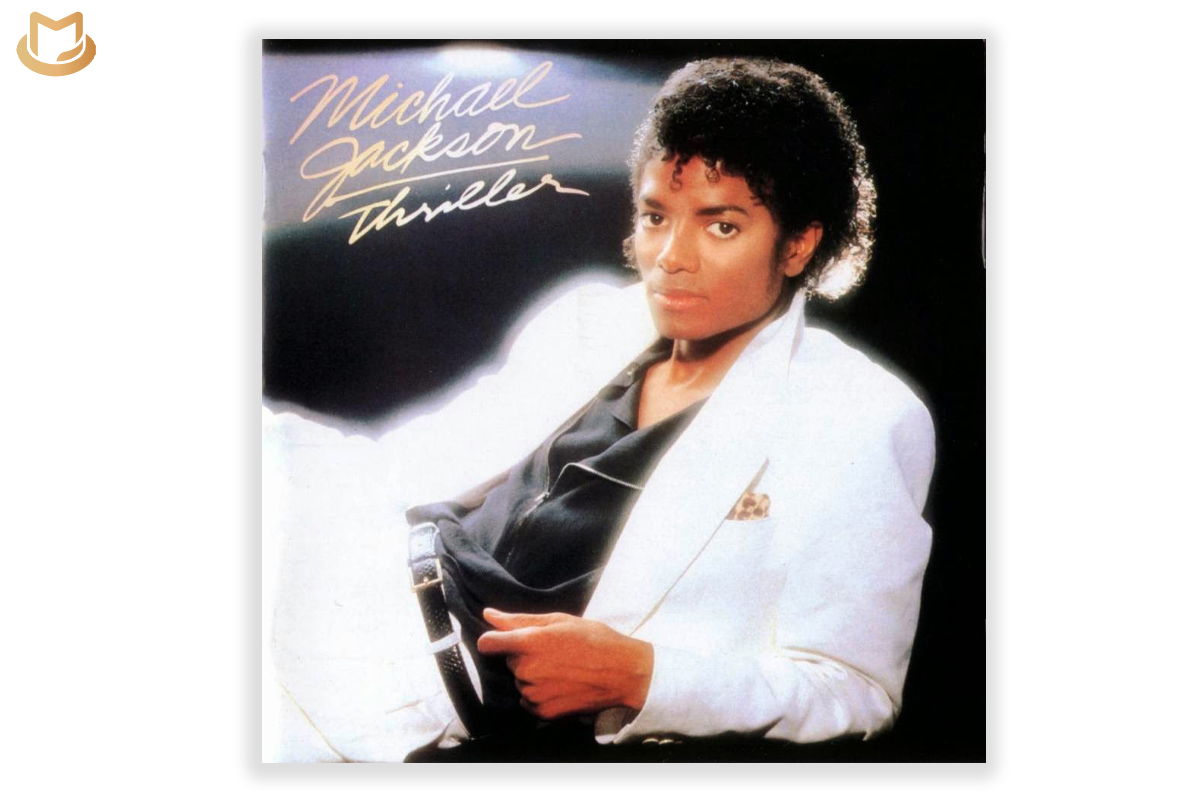
The Thriller cover is simple and that’s why it works. Michael reclines against a dark background in a white suit worn over a black zip-up shirt. The white suit glows against the dark. Nothing else fights for attention. It’s one of the most recognized images in pop music and it got there without any tricks.
Photographer Dick Zimmerman later told the story of the shoot. Michael didn’t like the wardrobe options provided for the session. Then he spotted the suit Zimmerman himself had worn to work that day, a Hugo Boss suit and asked to wear it. The two men swapped clothes. The suit fit Michael perfectly. So the most famous suit on any album cover wasn’t picked by a stylist at all. It was the photographer’s own suit.
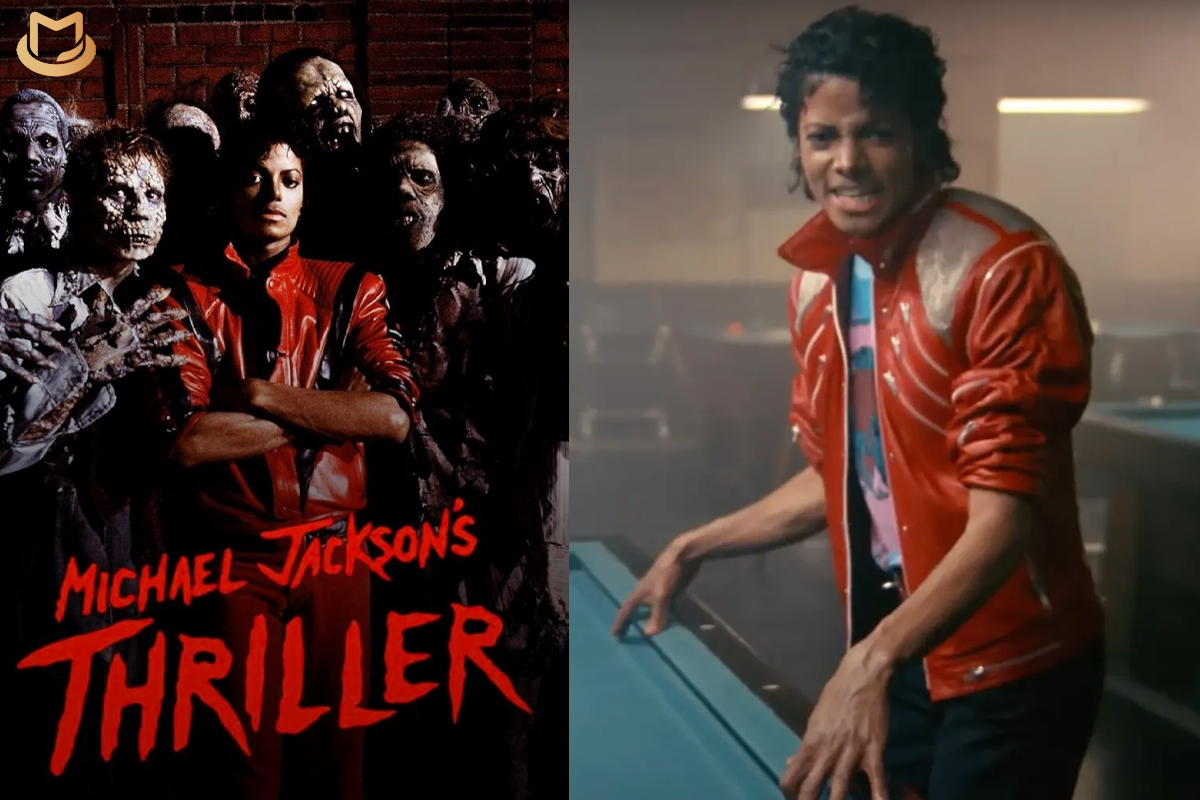
Don’t mix this cover up with the Thriller video. The red-and-black leather jacket from the video is a different outfit and it doesn’t appear on the cover. The tiger cub people remember from the Thriller artwork sits inside the gatefold, not on the front.
But the same era did give fans another jacket worth a mention. The Michael Jackson red leather jacket from the “Beat It” video had a bold color, a fitted shape and zipper details that made it look tougher than the white suit. It was a video costume, not a cover outfit, so it doesn’t count as one of the ten here. Still, it belongs to the Thriller era’s visual identity and fans link the two looks in their heads even now.
3. Bad (1987): The Black, Structured Look
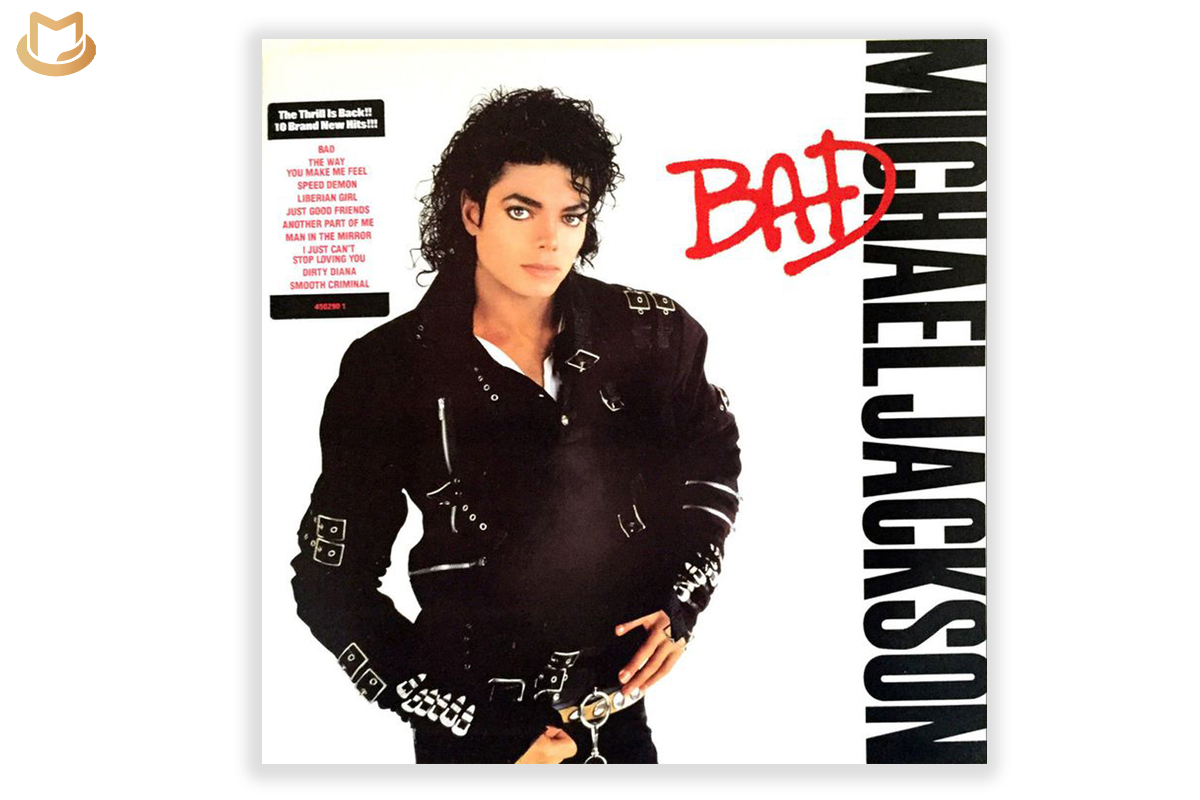
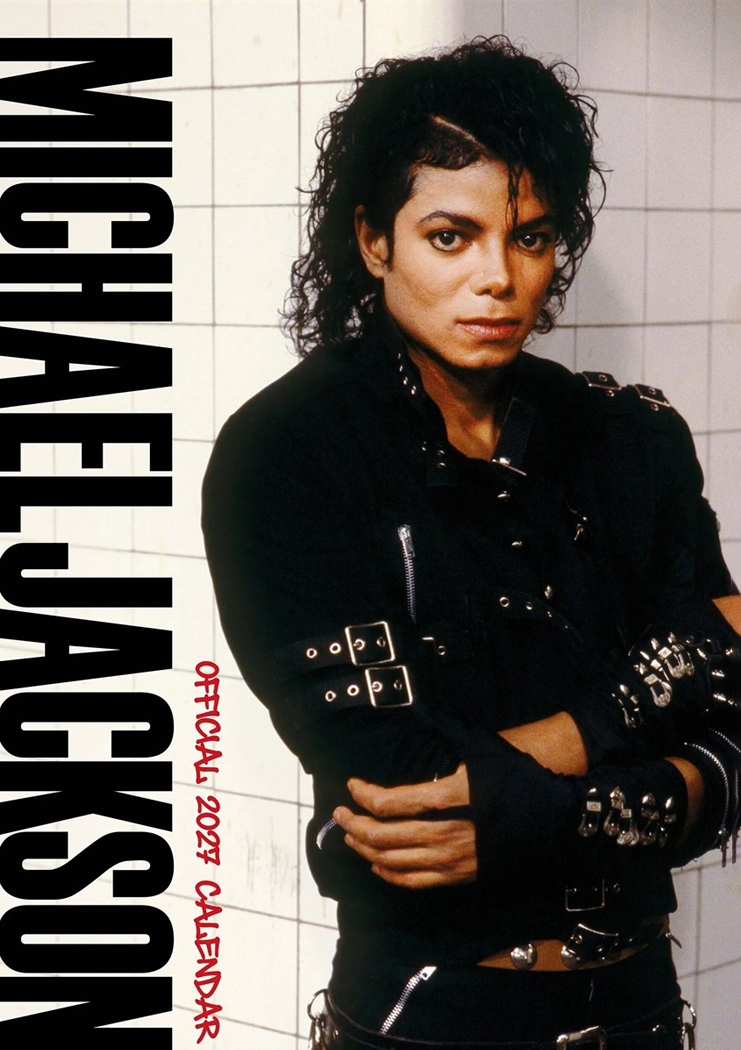
The Bad cover drops all the softness of the earlier covers. Michael stands against a plain white background in a black outfit covered in buckles and straps, fists clenched at his sides. Above his right shoulder, the word BAD runs in red script. Down the right side, his name runs vertically in black. Clothes, pose and type all push the same way: harder, darker and more serious.
Put it next to Off the Wall and the change hits hard. The tuxedo said polish and charm. This says edge. The smile is gone. The relaxed lean is gone. In its place there’s a stare and a stance that looks ready for a fight.
That shift matched a new period in his career. He wasn’t introducing himself as a solo artist anymore. He was an established star and the cover dressed him for it.
4. Got to Be There (1972): An Early Solo Image
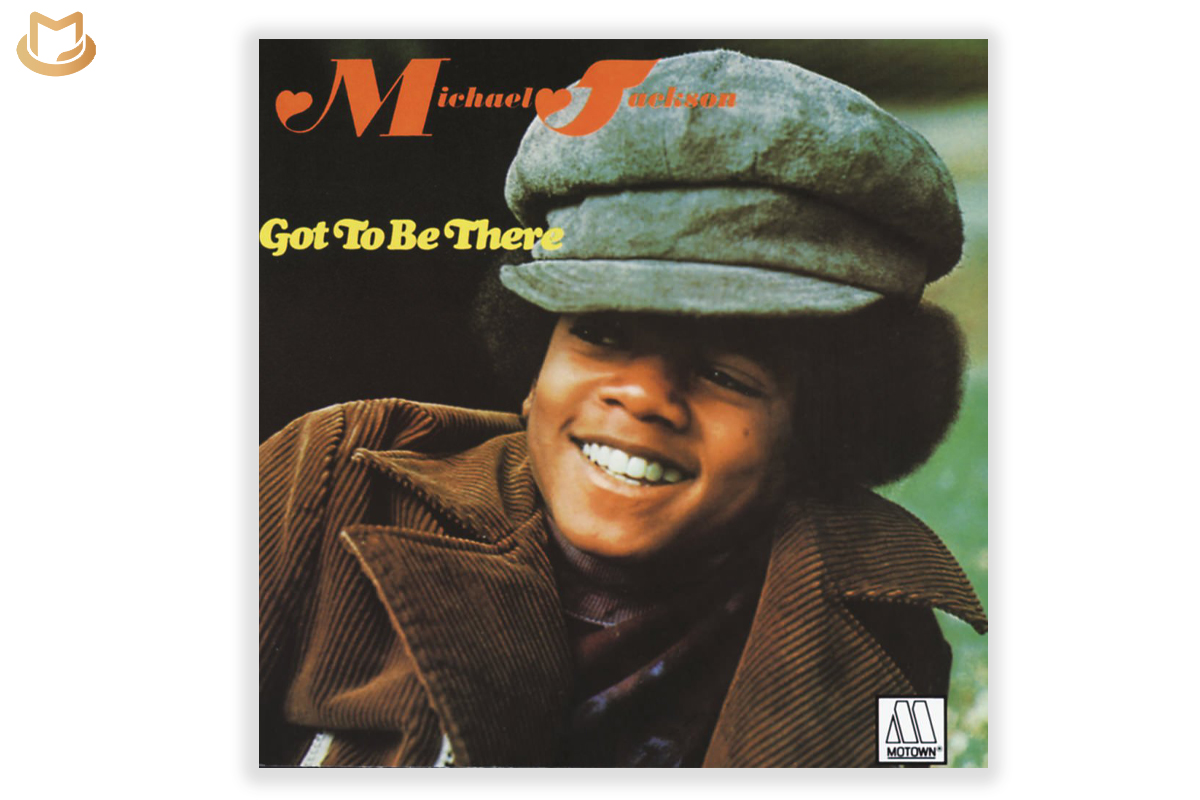
Before the tuxedo and the white suit, there was a 13-year-old boy on his own. Got to Be There came out on January 24, 1972, on Motown, as Michael’s debut solo album. The cover, shot by Jim Britt in 1971, shows a very young Michael presented simply. No big concept. No styled character. Just the singer, at the start.
That plainness is the point. Compared with the later covers, nothing here is trying to sell an image beyond youth itself. He was still a member of the Jackson 5, still a kid in the public’s eyes and the cover lets that youth do the talking.
Look at it beside Off the Wall and the distance becomes clear. One cover introduces a boy with a voice. The other introduces a man with a look. The seven years between them changed everything about how Michael presented himself and this early cover is where that story starts.
5. Ben (1972): The Early-1970s Look
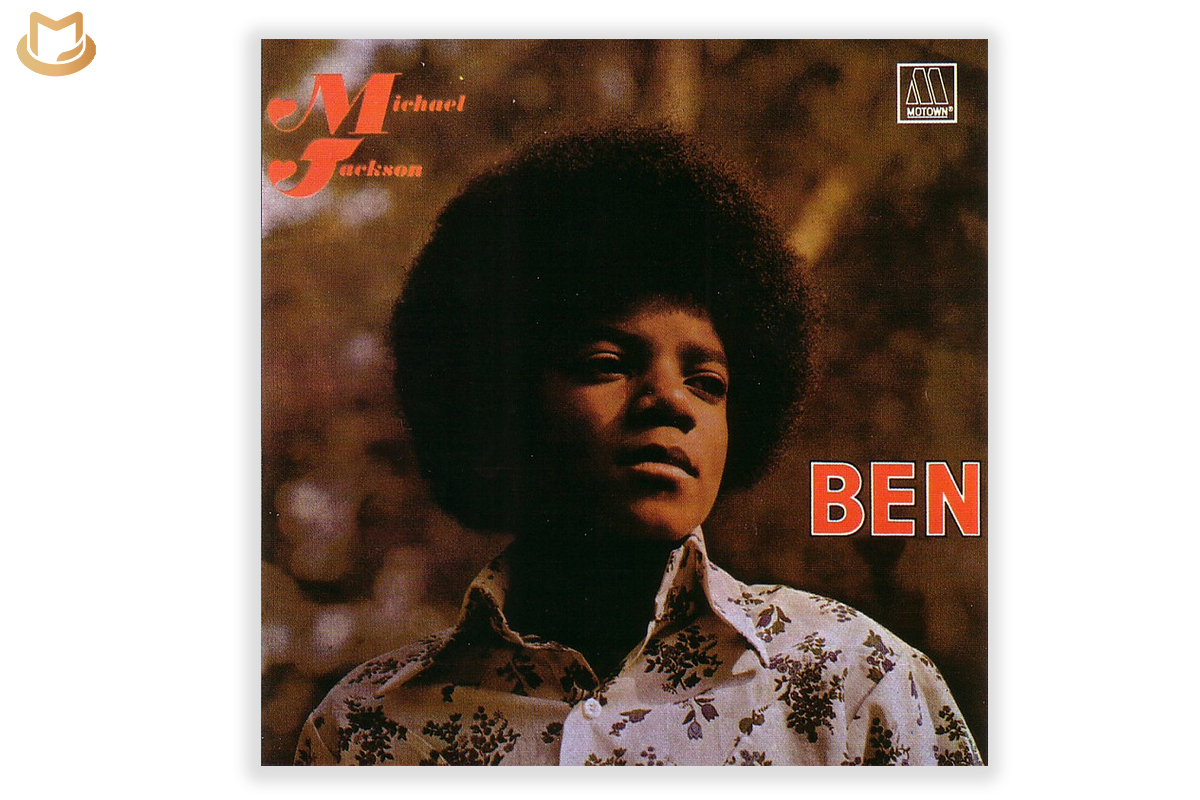
Ben followed the same year, in August 1972 and its cover had a stranger story than most. The original artwork showed Michael’s photo with a horde of rats at the bottom, a nod to the Ben film the title song came from. Motown pulled it fast. The label worried the rats would scare children, so the cover was reissued with Michael’s image alone and no rats. The rat version is now a rarity collectors chase. The title song became his first solo number one.
Next to Got to Be There, the presentation feels close in spirit. Both covers keep things simple and put a young Michael front and center. But Ben already carries a bit more story around it. The withdrawn artwork gave the album a talking point before anyone heard a note.
Like Got to Be There, the cover doesn’t lean on stagewear or a styled character. It’s a young singer’s photo, plain and direct, from a time before his image became a project in itself.
6. Music & Me (1973): A More Personal Presentation
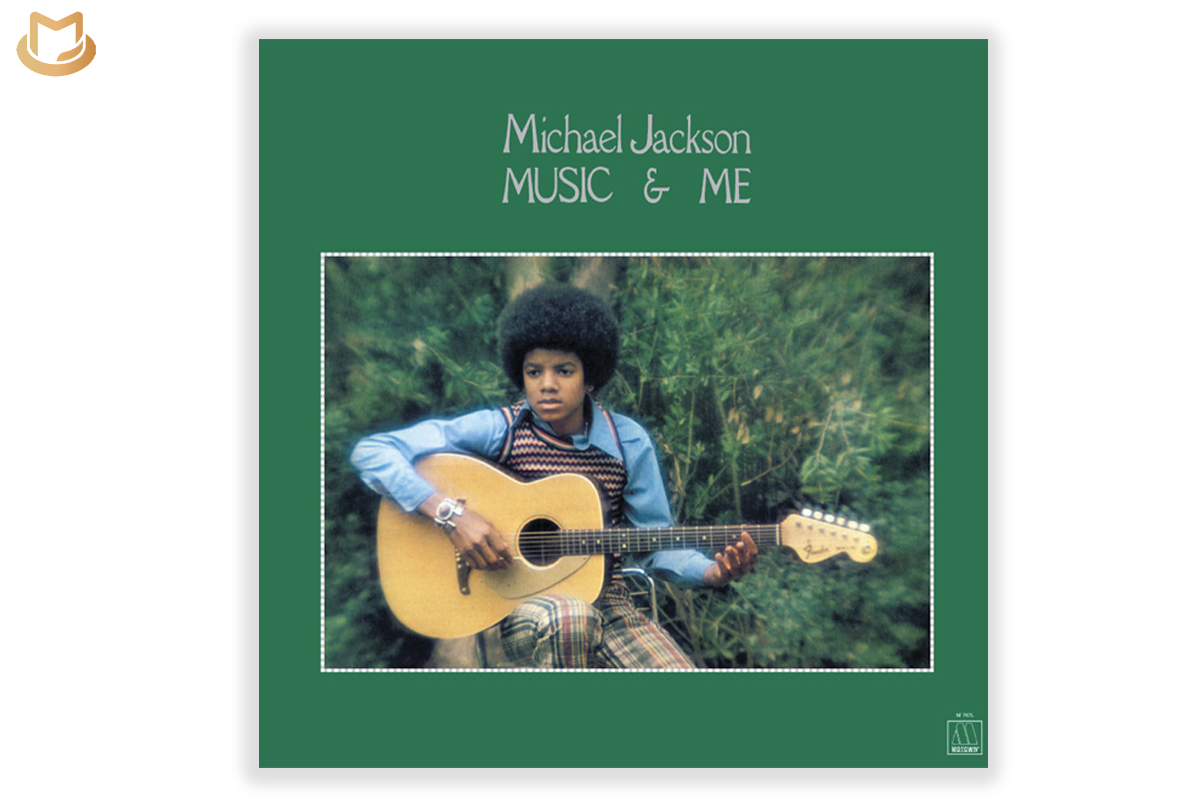
Music & Me arrived on April 13, 1973, when Michael was 14 and his voice was changing. The cover photo shows him strumming an acoustic guitar. No stage lights. No costume. Just a young artist with an instrument, presented as someone serious about music.
There’s a catch and it makes the cover more interesting. Michael played no instrument on the album itself and Motown had refused his own songs. So the guitar on the cover was an idea more than a fact. It framed him as a thoughtful young musician, even while the label kept him away from writing and playing.
That gap between image and reality is why this early cover matters. Later covers would sell a fully built character. This one sells a promise: a kid with a guitar, on his way to becoming something bigger.
7. Forever, Michael (1975): The Transition Towards Adulthood
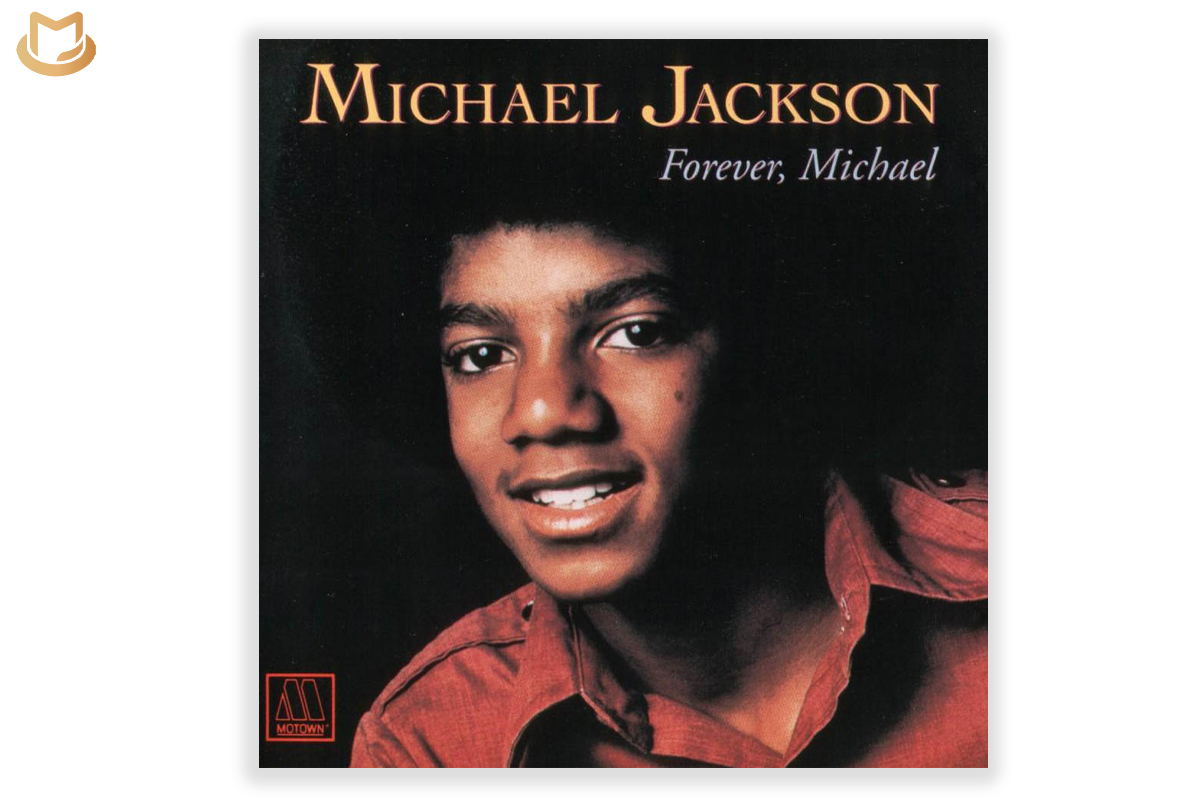
Forever, Michael came out on January 16, 1975, as Michael’s fourth solo album and his last for Motown. He was 16, moving toward a smoother soul sound. The original cover holds a photograph of him inside a white border, a simple frame that keeps the focus on his face. Later CD versions dropped the border, blew the photo up and changed the text, but the original’s plain framing says a lot about where he stood.
He wasn’t a child star anymore, but he wasn’t the Off the Wall figure yet either. The cover catches him in between: older, calmer, less of a kid and not quite the adult star he would become four years later. The tracks were recorded in 1974 and the release itself was held back while the Jackson 5’s “Dancing Machine” ran its course.
In the run of covers, this one works as a bridge. The early portraits showed a boy. Off the Wall would show a man in a tuxedo. Forever, Michael shows the step between them.
8. Dangerous (1991): A Visually Detailed Album Artwork
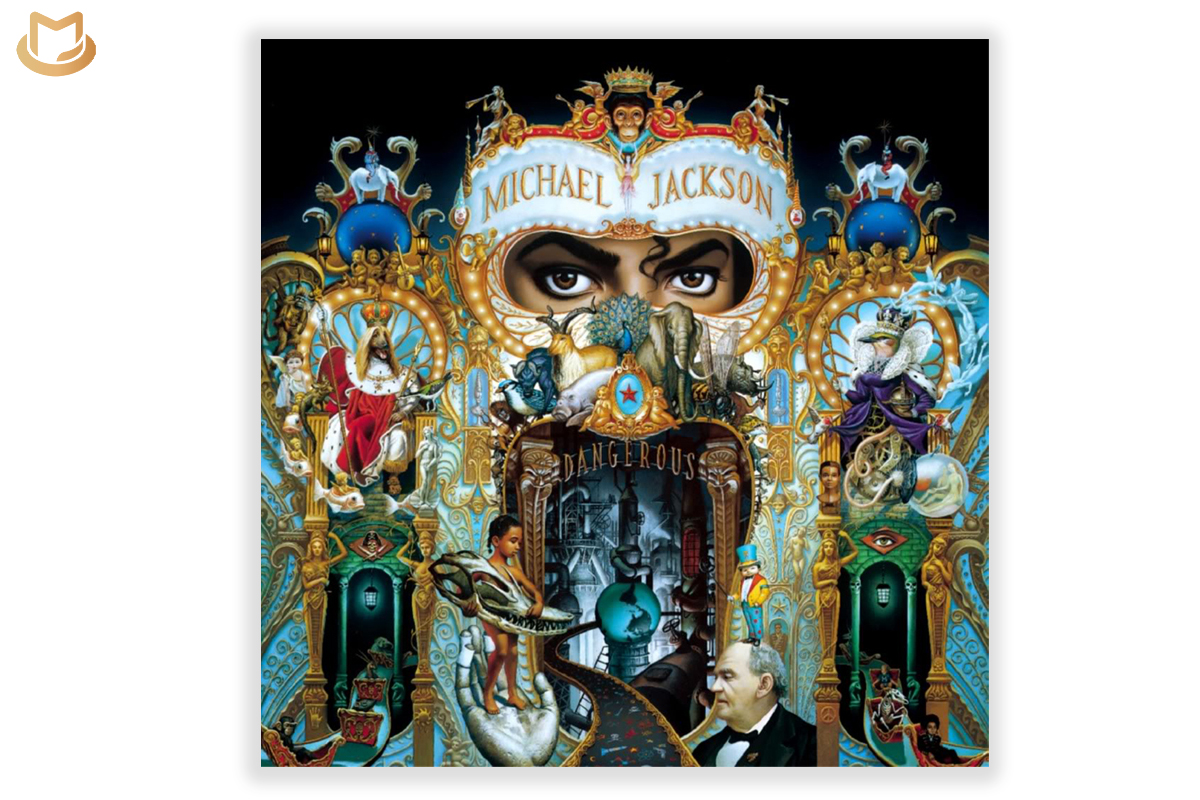
This cover breaks the pattern and that’s why it stays on the list. Dangerous doesn’t show a photographed outfit at all. The front cover is a painting by pop surrealist Mark Ryden and Michael wears a gold masquerade mask that hides most of his face, leaving his eyes to stare out. A chimpanzee’s face, possibly his pet Bubbles, sits on top of the mask. A dog and a bird in royal clothing stand on either side. Showman P. T. Barnum stands in the foreground, with circus imagery packed around them all.
Ryden had five days for the job and produced one design a day. His brief was to focus on Michael’s eyes, bring in animals and children and make something scary but still fun. The result is less a portrait and more a world.
9. HIStory: Past, Present and Future, Book I (1995): The Monumental Portrait
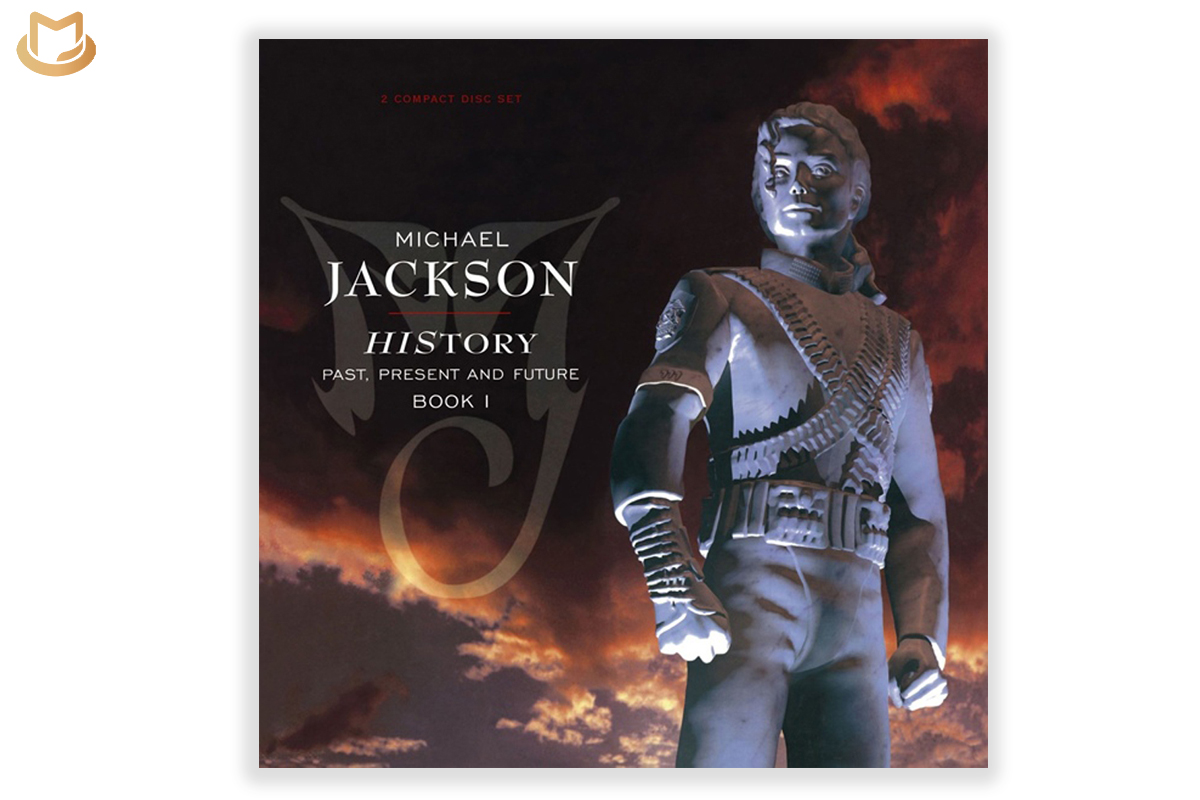
The HIStory cover doesn’t show Michael in person either. It shows a statue of him. Artist Diana Walczak built a 10-foot sculpture of Michael in a warrior-like pose in 1994 and the cover uses a photo of that statue against black-and-red clouds. The statue is white marble in real life, but you wouldn’t know it from the cover. The editing and lighting against those dark clouds make it look grey or silver instead, so on the cover it comes across as a silver figure. It wears a military-like outfit, hair clipped behind its head, with the album title in white letters down the left side.
That outfit needs one clear distinction. The statue’s military-like outfit isn’t a photo of a tour costume. The outfit used is the one from the Super Bowl, as per Michael’s request. The HIStory World Tour had its own military-inspired stage outfits, but the cover shows the sculpture, not the stage. What the cover sells is scale: a hero figure, cast large, like a monument to his own career.
Epic pushed the same idea further, placing giant replicas of the statue in cities around the world, from the River Thames in London to Alexanderplatz in Berlin. The cover turned Michael’s image into public sculpture and the military outfit was part of that larger-than-life statement.
10. Blood on the Dance Floor (1997): The Red Suit
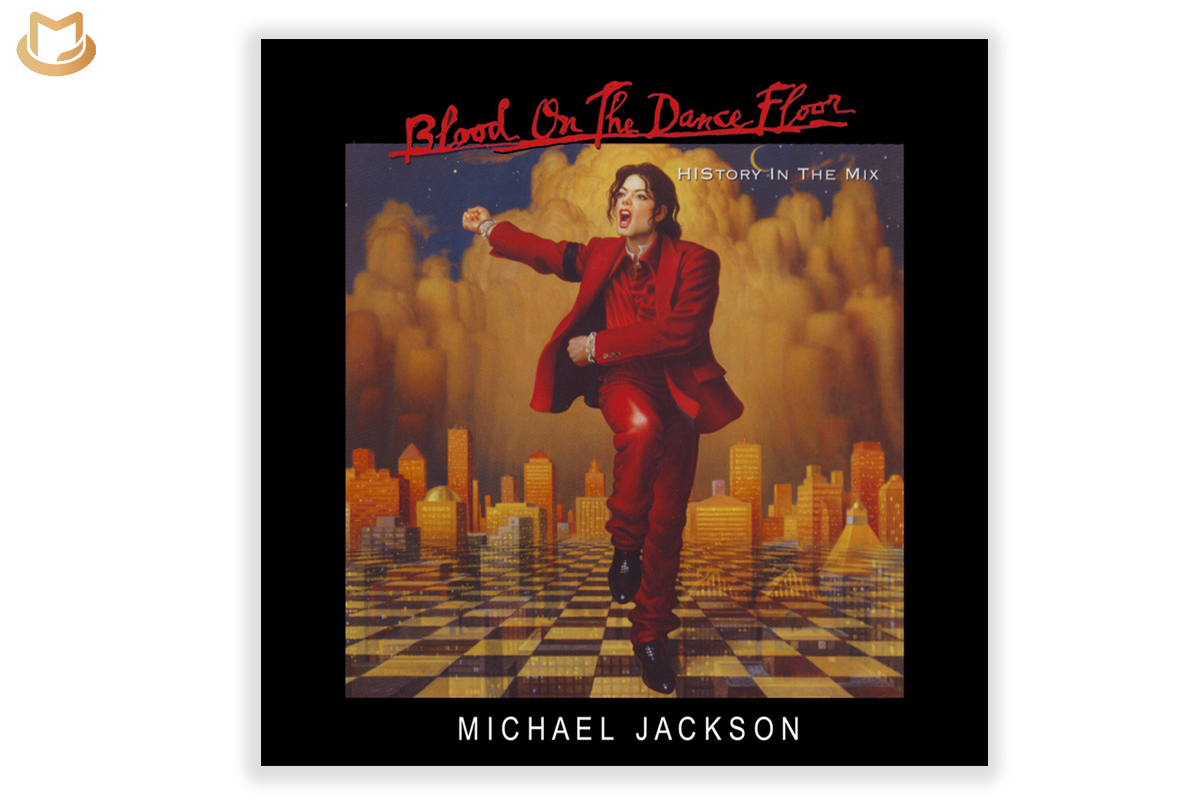
The final cover returns to a real outfit, painted rather than photographed. Blood on the Dance Floor came out on May 14, 1997, and its cover is an oil painting by artist Will Wilson. It shows Michael in a red leather suit, dancing across a checkerboard floor, with a city skyline rising through clouds behind him.
Wilson worked from photographs taken on a break during the shoot for the title track’s short film, pictures of Michael dancing in the red leather suit. What looks like broken chains around his wrists on the cover were really just thick bracelets he was wearing that day. The suit, the pose, the bracelets all came straight from those photos.
But one thing on the cover was never in the photos. Wilson had already boxed the finished painting up and handed it to a FedEx driver when the phone rang. It was Michael, who had seen a picture of it and wanted one change: a black armband on his arm. Wilson put the phone down, ran out to the driveway while the truck was still there and painted the armband while the painting was still in the box.
The background holds a secret of its own. In the left-hand corner, some lit windows form the letters M and H, side by side. They stand for Wilson’s cousin Matthew Hammond, the biggest Michael Jackson fan he knew and Wilson slipped them in as a little present for him.
After the mask of Dangerous and the statue of HIStory, this cover brings the article back to what it started with: a man, an outfit and a pose. The red suit is loud, confident and built for movement and it closes the run with the same directness the tuxedo opened it with.
Conclusion
Run through these ten covers in order and a story appears. A boy in simple portraits grows into a man in a tuxedo, then a star in a white suit, then a tougher figure in black leather. After that the image outgrows photography itself: a mask, a statue, a painted red suit. The clothes changed because the career changed and each cover dressed Michael for the stage he stood on at the time.
That’s what makes these covers worth looking at again. They aren’t just packaging. They’re a record of how Michael Jackson wanted to be seen, one outfit at a time.