

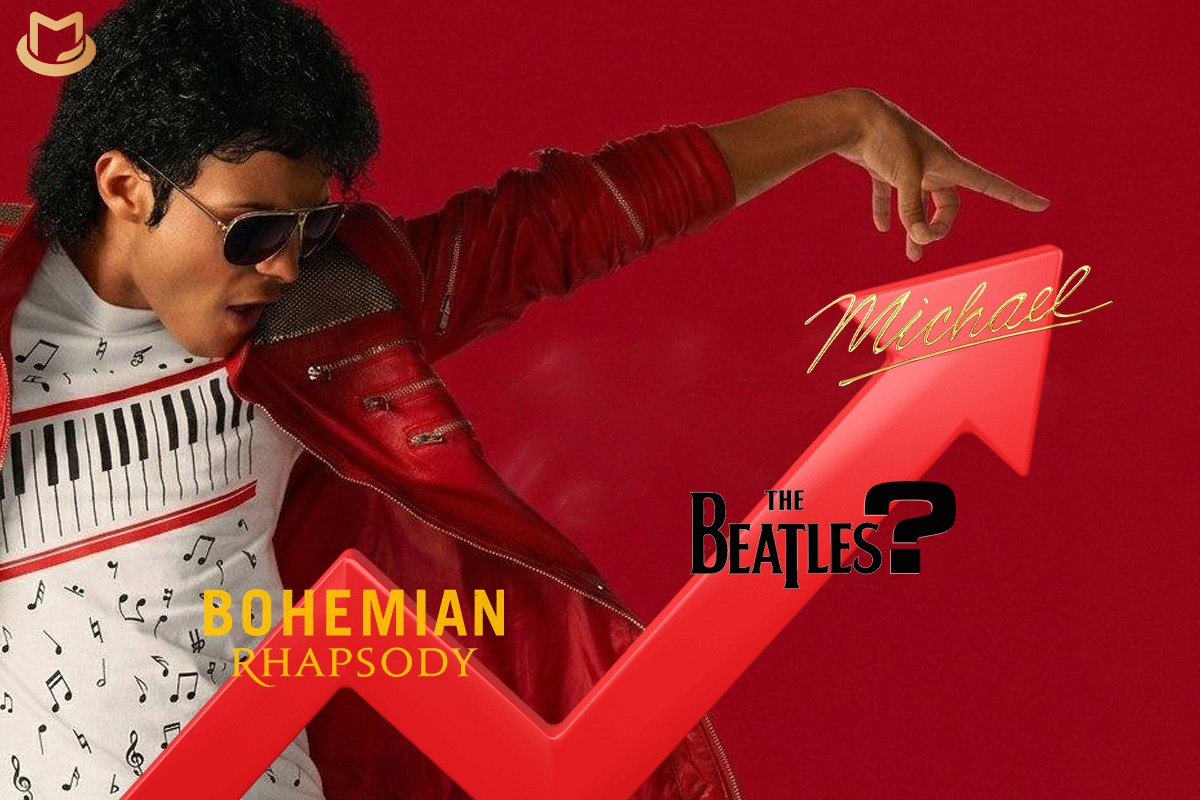
Before Michael, the benchmark for musical biopics seemed untouchable.
For years, Bohemian Rhapsody stood as the gold standard. With $911 million at the worldwide box office, it became the film every studio pointed to when discussing the commercial potential of stories about music legends. It was the exception, not the rule.
Then came Michael.
Not only did the film surpass Bohemian Rhapsody to become the highest-grossing musical biopic of all time, it also rewrote another chapter of cinema history, becoming the highest-grossing non-franchise film with an all-Black principal cast and the second-highest-grossing all-Black ensemble film ever, behind only Black Panther.
And that may be the movie’s most unexpected legacy.
It has made everyone else nervous.
Recent reports have suggested that the unprecedented success of Michael has sent shockwaves through Hollywood, particularly among those involved in the ambitious four-part Beatles project directed by Sam Mendes. What once looked like a guaranteed event now carries a different burden: comparison.
How do you justify a reported $250 million investment when audiences have just demonstrated that they are willing to turn out in extraordinary numbers for a musical biopic that delivers spectacle, emotion, authenticity and a once-in-a-generation performance?
According to industry insiders, “everybody’s feeling the pressure.”
For decades, Michael Jackson himself lived with impossible expectations. Every album had to outperform the previous one. Every tour had to be bigger. Every performance had to redefine entertainment. He wasn’t competing with his peers; he was competing with the standards he had already established.
It seems fitting that the film bearing his name has done exactly the same thing to Hollywood.
The irony is difficult to ignore.
For years, executives questioned whether Michael Jackson’s story could succeed. They worried about controversy. They debated whether younger audiences would connect. They wondered if international viewers would show up.
The audience answered those questions with their wallets.
More than 900 million dollars later, Michael didn’t simply succeed. It shattered assumptions.
The achievement becomes even more significant when viewed through another lens.
Hollywood has long treated films with predominantly Black casts as “risky.” Time and again, stories centred around Black experiences have had to fight harder for funding, larger marketing budgets and international distribution. Executives frequently claim these stories do not “travel.”
Yet a film about a Black boy from Gary, Indiana, who transformed himself into the biggest entertainer the world has ever known, travelled everywhere.
Asia embraced it.
Europe embraced it.
Latin America embraced it.
Africa embraced it.
Audiences from every background, culture and generation connected with the story because they connected with Michael Jackson.
They always have.
Unlike Black Panther, which represented a groundbreaking fictional universe built within the security of the Marvel machine, Michael stood entirely on its own. No superheroes. No cinematic universe. No franchise momentum.
Just music.
Just talent.
Just one extraordinary life.
It reminded Hollywood of something it often forgets: authenticity resonates. Great stories transcend borders.
And perhaps the most remarkable aspect of all this is that the pressure being felt elsewhere isn’t really about money.
It’s about expectations.
Audiences no longer want safe, formulaic musical biographies assembled from familiar templates. They have seen what can happen when filmmakers commit fully to scale, emotional depth and artistic ambition. They have seen a lead performance that many have described as transformative. They have experienced concert sequences that recreate not just songs, but moments in cultural history.
They now expect more.
The Beatles films may still become extraordinary achievements. Other musical biopics currently in development may find their own identities and successes.
But they will all enter theatres under the shadow of Michael.
Because the conversation has changed.
The question is no longer whether musical biopics can become global phenomena.
The question is whether they can reach the standard Michael Jackson’s story has now established.
For years, Michael Jackson raised the bar in music videos, live performances and popular culture itself. He forced everyone around him to think bigger because he refused to accept limitations.
Now, decades later, the film celebrating his life appears to have done the exact same thing for cinema.
Hollywood wanted the next Bohemian Rhapsody.
Instead, it got Michael.
And the bar may never come back down.
Sebastian for MJVibe