

Since the release of the film “Michael”, cinemas have found themselves at the centre of an unexpected cultural shift, one that blurs the line between celebration, disruption, and evolving fandom behaviour.
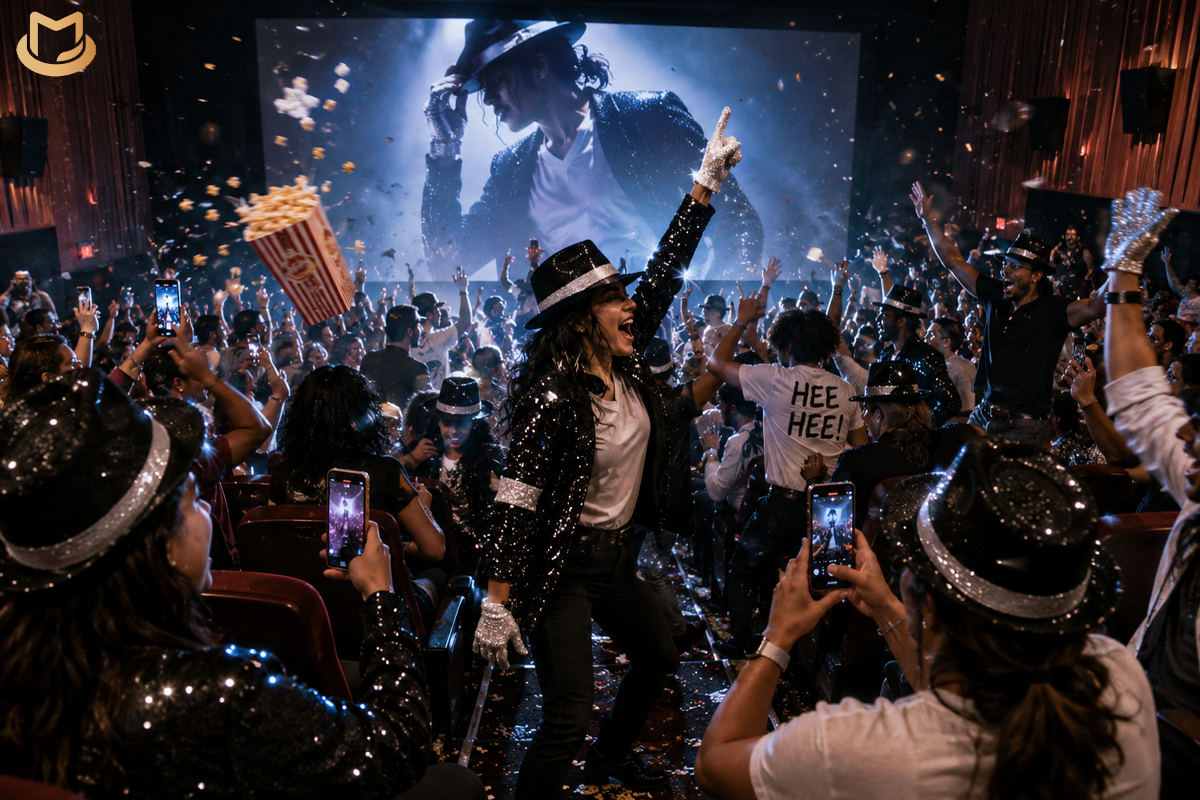
What began as anticipation quickly turned into repeat viewings and deep emotional engagement. Fans returned to screenings multiple times, not just to rewatch the film, but to experience it collectively. With familiarity came a shift in atmosphere: quiet observation gradually gave way to expression. By the end of some screenings, audiences were singing along, dancing, and treating the finale less like a traditional film ending and more like a concert moment.
In response, certain cinemas embraced this energy, introducing official sing-along screenings where participation was expected. In those spaces, the rules of traditional cinema were knowingly relaxed, and what might once have been considered disruptive behaviour was reframed as part of the experience.
Then came the next layer.
Social media accelerated everything. “Watch parties” and influencer-led events began appearing, often fuelled less by cinema tradition and more by content creation. Clips of audiences dancing in front of the screen, shouting iconic Michael Jackson references, and filming reactions quickly spread online, generating millions of views. Some of these events were coordinated with cinemas, while others existed in a greyer space, driven by visibility, engagement, and viral potential.
This is where the conversation becomes more complicated.
On one hand, the Michael Jackson fan community has largely been open, welcoming newcomers, celebrating renewed attention, and recognising that the film has introduced a new generation to Michael’s legacy. For a fandom that has worked for decades to preserve and share his artistry, increased visibility is often seen as something positive. More fans, more appreciation, more cultural longevity.
But alongside that openness comes an unspoken question within the community itself: who is here to stay, and who is simply here for the moment?
Not every new wave of attention translates into long-term engagement. Some newcomers may genuinely become part of the fanbase, learning, listening, and staying connected. Others may be primarily drawn to the moment, the viral energy, the social media reach, the opportunity to attach themselves to a trending cultural wave. The community, while welcoming, is also observant. It knows the difference between participation and performance-for-profile-building is not always easy to ignore.
At the same time, cinema etiquette has undeniably shifted.
Imagine booking a ticket expecting a calm evening: a quiet screening, popcorn in hand, fully immersed in the film. Instead, you find a room erupting into dancing, shouting, and people standing in front of the screen filming content for social media. For some, this becomes an unforgettable communal experience. For others, it is disruptive to the point of frustration.
Even though many UK cinemas and organisers clearly communicate the nature of these special screenings in advance, not every attendee fully understands what they are walking into. That gap in expectation can turn what is intended as a celebration into confusion or disappointment.
Ultimately, the “Michael” cinema phenomenon sits at a crossroads of modern fandom. It highlights both the strength and vulnerability of fan-driven culture: its ability to bring people together, and its susceptibility to performance-driven attention economies.
The question is no longer simply whether this trend is right or wrong.
It is whether cinemas, communities, and audiences can agree on when they are attending a film… and when they are stepping into something closer to a live, participatory event where silence is no longer guaranteed, and maybe not even expected.
Sebastian for MJVibe